When you first open the Incoterms reference book, it may seem like a set of confusing codes. However, among all the terms, FCA is the “gold standard” that makes international transportation understandable and transparent. We will help you understand the intricacies of this term and find reliable solutions for each stage of the logistics chain.
What is FCA and how does it work in international transportation?
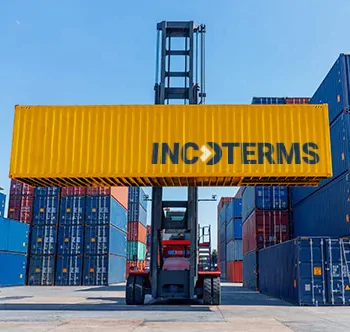
The term FCA (Free Carrier) means that the seller transfers the goods to the carrier or another person designated by the buyer at their premises or at another specified location. These delivery terms are universal because they are suitable for any type of transport, from sea containers to cargo planes.
When a business chooses FCA Incoterms, it is important to clearly define the point of transfer of the goods. This can be the manufacturer’s warehouse, airport terminal, or logistics hub. It is at this point that the critical moment of risk transfer occurs. Since modern logistics requires speed, we at Euro Forwarding offer our customers fast road transport, providing LTL and FTL services for the most efficient use of this basis.
Seller and buyer obligations under FCA terms
Under this delivery term, the parties have a clearly defined list of obligations. The seller is responsible for preparing the goods, while the buyer controls the main stage of transportation.
The main obligations of the seller include:
- Manufacturing and packaging the goods in accordance with the requirements of the contract.
- Marking the cargo for identification during transportation.
- Passing through export customs clearance.
- Loading the goods onto the buyer’s vehicle (if the place of delivery is the seller’s territory).
For their part, the buyer has the following obligations:
- Concluding a contract with a transport company for transportation.
- Paying the cost of delivery from the point of receipt to the final destination.
- Completing all procedures related to import and transit in third countries.
- Accepting the goods at the agreed location and informing the seller in a timely manner about the appointment of the carrier.
This division makes international transportation clear to both parties, minimizing the scope for disputes.
How delivery responsibility is determined
The main issue in any transaction is responsibility for damage or loss of cargo. In the FCA Incoterms rules, this moment occurs when the goods are transferred to the carrier. An interesting feature is that the place of transfer directly affects the loading procedure. If the transfer takes place at the seller’s warehouse, the seller is fully responsible for physically loading the goods into a vehicle or container. If the meeting with the carrier is scheduled at any other location (for example, at a railway station), the seller is considered to have fulfilled the conditions simply by making the goods available to the carrier without unloading them from their vehicle.
In addition to physical movement, it is important to consider the paperwork. The seller is obliged to provide all documents necessary to complete export customs procedures. Our company takes on complex tasks by offering professional customs brokerage services, allowing customers to avoid delays at the border.
Advantages and disadvantages of using FCA in logistics
This basis has its strengths and weaknesses, which should be considered before signing a contract. For many companies, this type of delivery is the optimal choice due to complete control over the supply chain.
Advantages for the buyer:
- The ability to independently choose the route and type of transport.
- Direct control over transportation costs.
- Minimization of seller’s markups on logistics services.
Typical disadvantages for the buyer:
- The need to independently organize complex international transportation.
- The risk of additional costs in case of transport delays at the transfer point.
Euro Forwarding has a successful track record of working with global airlines, so we often organize air transportation when urgent delivery is critical for the customer. Global logistics becomes easier when every step is calculated by experts.
An example of the real-life application of FCA in the delivery of goods
Let’s consider a practical situation. A Ukrainian company orders equipment from a manufacturer in Germany on FCA Hamburg Terminal terms. In this case, the seller in Germany prepares the goods, packs them, and transports them to the terminal in Hamburg on their own. There, they go through all the necessary export customs procedures.
As soon as the cargo arrives at the terminal warehouse and the carrier hired by the Ukrainian side (for example, Euro Forwarding) confirms receipt, the seller’s role is complete. Further logistics, including freight, insurance, and customs clearance in Ukraine, fall on the buyer’s shoulders. This example clearly demonstrates how FCA rules allow for the division of areas of influence: the seller is responsible for export customs clearance in their country, and the buyer has the freedom to choose a logistics provider.
Understanding how FCA works allows companies to plan their budgets more effectively and avoid hidden costs. Regardless of the complexity of the route, a professional approach to every detail guarantees the safety of your cargo.
FAQ
- What does the term FCA mean under Incoterms, and for which modes of transport is it suitable?
The term FCA (Free Carrier) refers to the handover of the goods to the carrier at an agreed location. These international terms are suitable for all modes of transport.
- What are the seller’s main obligations regarding the preparation of the goods and customs procedures under FCA terms?
The seller prepares the goods and completes the export formalities. They carry out loading at their own warehouse.
- What logistical and financial obligations does the buyer assume under this delivery term?
The buyer organises delivery and pays for onward transport. They are responsible for import formalities.
- How exactly does the place of transfer of the goods affect the seller’s responsibility for the physical loading?
The place of transfer determines liability: at the warehouse, the seller loads the goods; at another location, they merely hand them over.
- At what point does the risk of damage to or loss of the goods pass from the seller to the buyer?
The risks pass at the moment the goods are handed over to the carrier. After that, liability falls on the buyer.
- What are the main advantages and disadvantages for the buyer when choosing FCA delivery terms to control the supply chain?
Advantages of FCA: the buyer controls the choice of carrier, route and freight cost, which provides flexibility and cost savings. Disadvantages: the buyer assumes the risks, insurance and organisation of transport from the point of departure, which requires logistical expertise and entails additional costs.