Company Euro Forwarding provides a professional approach to complex logistics tasks. When it comes to objects that require special attention due to their physical and chemical properties, accuracy and compliance with regulations come to the fore.
What are dangerous goods and how are they classified?
In logistics, the term “dangerous goods” refers to any materials, products, or substances that may pose a threat to human life, property, or the environment during delivery or storage. These do not necessarily have to be industrial acids or explosives. This category often includes household goods: perfumes, aerosols, lithium batteries, and even some types of paint.
To minimize risks, a unified system for the distribution of such goods has been developed. The main classification used by carriers in Europe and Ukraine is based on the ADR (DOPNV) agreement. It allows for the unification of requirements for packaging, accompanying documents, and means of transport. Our company offers customers reliable road transport, providing LTL (less than truckload) and FTL (full truckload) services, taking into account all technical requirements.
The classification system helps to determine the degree of risk and select the appropriate type of container. This process is based on the following criteria:
- Physical state (gaseous, liquid, solid).
- Chemical activity (ability to self-ignite, oxidize, or corrode).
- Toxicity and impact on biological organisms.
- Level of radioactive radiation.
Correctly determining the category to which a specific cargo belongs is the foundation on which all further logistics and the supply chain are built. This allows you to avoid mistakes when loading and prevent the incompatibility of different goods in one vehicle.

Types of dangerous goods according to international law standards
Today, international law establishes clear boundaries for dividing dangerous objects into nine main classes. Each of them has its own subclasses and specific handling requirements. Studying these categories is mandatory for all market participants, since traffic safety depends on understanding the properties of each compound.
Here is a detailed structure according to generally accepted standards:
- Explosives and products. These include gunpowder, detonators, and pyrotechnics. They are capable of mass explosion or intense scattering of debris.
- Gases. This category includes compressed, liquefied, or pressurized gases (propane, chlorine, nitrogen). They can be flammable, toxic, or oxidizing.
- Flammable liquids. The most common class, which includes fuels, solvents, alcohols, and some varnishes.
- Flammable solids. Materials that can ignite from a spark, friction, or contact with water or air.
- Oxidizing substances and organic peroxides. They may not burn on their own, but they actively support the combustion of other materials by releasing oxygen.
- Toxic and infectious substances. These include poisons, pesticides, and biological preparations containing pathogenic microorganisms.
- Radioactive materials. Materials that emit spontaneous nuclear radiation.
- Corrosive substances. Acids and alkalis that cause damage to skin, metals, and equipment.
- Other dangerous substances and products. Items that pose a danger but do not fit into the previous eight classes (e.g., dry ice or lithium-ion batteries).
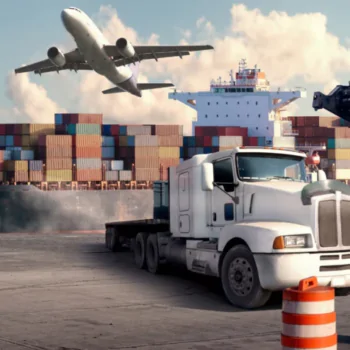
When business requires speed, Euro Forwarding uses its successful experience and well-established air transportation, cooperating with global airlines to deliver specific goods that require special temperature conditions or urgency.
It is important to understand that international law is constantly being updated, introducing new standards for the handling of lithium components and environmentally hazardous compounds. Keeping track of these changes ensures that every shipment is legitimate and protected from delays at borders.
How to properly label dangerous goods
Visual identification is a key element in preventing accidents. Correct labeling gives drivers, warehouse workers, and regulatory officials an instant understanding of what is inside a package or container. All dangerous goods must have clear hazard signs in the form of a diamond with appropriate pictograms.
In addition to visual symbols, there are other important elements of identification:
- UN number. This is a four-digit code that allows the substance to be accurately identified according to the international register.
- Transport name. The official name of the product, which must match the documentation.
- Information plates. Orange signs on the vehicle containing the hazard identification number and UN number.
Proper preparation of packaging and signs is not just a formality, but an important safety measure. If during an inspection it is found that the labeling is missing or does not correspond to the contents, this will result in significant fines and the vehicle being blocked. At Euro Forwarding, we carefully check the integrity of labels before each flight.
It is important to remember that each shipment requires an individual approach to placing labels. They must be resistant to atmospheric influences and remain legible throughout the entire route. This allows emergency services to quickly choose the right strategy for dealing with the consequences of an incident, knowing exactly what substances are in the cargo compartment.
Features of transporting dangerous goods
The process of delivering ADR goods is significantly different from working with food or furniture. The process of transporting such goods requires the use of a specially equipped vehicle fleet. Vehicles must have the appropriate permits, fire extinguishing equipment, personal protective equipment for the driver, and special markings on the tractor and semi-trailer. Comprehensive logistics for dangerous goods includes the following important aspects:
- The driver must have an ADR certificate (DOPNV certificate) confirming that they have undergone special training.
- Development and approval of a route that bypasses densely populated areas, protected areas, and tunnels with restrictions on the passage of chemical goods.
- Use of specialized containers that have been tested for strength and tightness.
- Control of the compatibility of goods when forming consolidated shipments.
We offer ADR cargo transportation (LCL/FCL) by all modes of transport, providing optimal solutions for both full truckloads and small consignments. Such transportation requires not only knowledge of geography from the logistics provider, but also a deep understanding of chemical processes.
Modern standards also require the availability of “Written Instructions” for the driver. This is a clear algorithm of actions in case of leakage, ignition, or other emergency situations. Only such a systematic approach guarantees that the transportation will be completed successfully and the customer will receive their goods without any complications.
How cargo classification affects logistics procedures
The way the classification is carried out directly dictates the rules of the game for the entire logistics scheme. It affects the timing, cost, and choice of partners. For example, if the goods belong to a high hazard class, the requirements for warehouses become much stricter: special ventilation, automatic fire extinguishing systems, and spill containment areas are required.
The impact of the goods category on business processes is manifested in the following:
- Document flow. In addition to the standard waybill, a Dangerous Goods Declaration (DGD) and a Material Safety Data Sheet (MSDS) are required.
- Cost. The price of delivery for such items is always higher due to risk insurance, the involvement of certified personnel, and specialized transport.
- Route planning. There are restrictions on movement on certain sections of roads on weekends or at night, which must be taken into account when calculating the arrival date.
Effective logistics begins with an audit of the information provided by the client. Our specialists help to correctly interpret hazard codes in order to avoid wrong decisions at the stage of booking a place in transport. Understanding how classification regulates interaction with customs and road services allows us to pass all checks quickly and without comments.
The Euro Forwarding team is always ready to become your reliable partner in the world of complex transportation. We take responsibility for ensuring that your goods cross borders safely and in accordance with all legal norms.
Would you like to receive a detailed calculation of the cost of delivery or professional advice on completing ADR documents? Contact our experts today to ensure stability and confidence for your business every kilometer of the way.
FAQ
- What exactly falls under the category of ‘dangerous goods’ in logistics?
Dangerous goods are any substance, material or article which, during storage or transport, may pose a threat to people, property or the environment. This category includes not only acids and explosives, but also everyday household items such as aerosols, lithium batteries and certain types of paint.
- What criteria are used to classify cargo into hazard classes?
The classification is based on the physical state of the substance (gas, liquid, solid), its chemical activity, toxicity and level of radioactivity. It is these parameters that determine the type of packaging, the route and the requirements for the vehicle.
- What are the main classes into which dangerous goods are divided according to international standards?
Under the ADR agreement, there are nine main classes: from explosives (1) and gases (2) to corrosive substances (8) and various dangerous objects (9), including dry ice and lithium-ion batteries. Each class has subclasses with specific transport requirements.
- What are the mandatory elements of correct ADR cargo labelling?
The labelling comprises a diamond-shaped danger symbol with a pictogram, a four-digit UN number and an orange information plate on the vehicle. All elements must be weather-resistant and remain legible throughout the entire journey.
- What additional documents are required to arrange the delivery of dangerous goods?
To arrange the transport of ADR cargo, a Dangerous Goods Declaration (DGD) and a Material Safety Data Sheet (MSDS) are mandatory. The driver must also hold a special licence — an ADR certificate — confirming that they have completed specialist training.
- How does a consignment’s hazard class affect the cost and logistics conditions?
The higher the hazard class, the stricter the requirements for warehousing, transport and insurance — this directly affects the service and its cost. Furthermore, there are restrictions on travel along certain routes, and the processing stages require the provision of certificates and qualified personnel, which also contributes to the final delivery price.