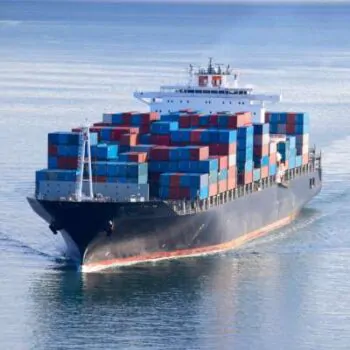
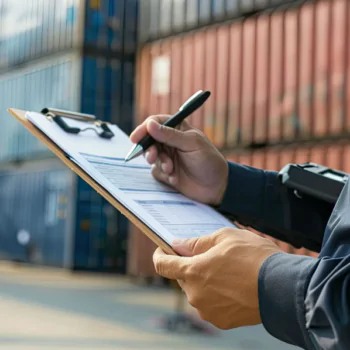
Logistics planning in 2026 requires an understanding of how the state border works today. We will help you navigate the complex maze of regulations, ensuring the rapid movement of goods through border crossing points. As Ukraine continues its active integration into the European economic space, knowledge of current requirements is becoming a key factor in the success of any foreign economic operation.
Overview of the main customs rules for import and export in Ukraine
The main customs rules today are based on the principles of a paperless environment. The emphasis has finally shifted from the physical presence of an inspector to automated risk analysis. This means that every transaction, whether it is the import of industrial equipment or the shipment of agricultural products abroad, goes through electronic checks before the vehicle even reaches the barrier.
For successful business, it is important to understand that each product has its own unique code under the Ukrainian Classification of Goods for Foreign Economic Activity (UKT ZED). In 2026, the classification became even stricter: an error in even one digit of the code can lead to a change in the customs duty rate or the need to obtain additional certificates. When exporting, the main focus is on the origin of the products. This allows domestic producers to take advantage of preferential rates when importing goods into EU countries and G7 partners. The general regulatory framework includes the following elements:
- Determination of customs value: the state uses a database of comparative prices, so underestimating the value automatically activates the “red corridor.”
- Electronic declaration: 100% of declarations are submitted through the payer’s account or specialized software.
- Transit simplifications: the use of general guarantees allows cargo to be transported across several borders without additional financial security at each section.
These measures make customs procedures predictable for entrepreneurs. Euro Forwarding understands how important speed is in modern logistics, so we constantly monitor changes to ensure that your business does not come to a standstill due to formalities. We offer a comprehensive solution where the client receives full support for the transaction. For example, our company has successful experience working with global airlines, which allows us to carry out complex multimodal transportation and air transportation even in a dynamic legislative environment.
Changes in Ukraine’s customs regulations for 2026
Current legislation has undergone significant transformations aimed at full synchronization with the EU Customs Code. One of the main innovations of 2026 was the introduction of an updated phase of the NCTS system, which allows real-time tracking of cargo from the place of loading to the final destination without unnecessary paper reports at each border.
In addition, there have been changes in the Authorized Economic Operator (AEO) system. It is now easier for medium-sized businesses to obtain reliable partner status, which entitles them to simplified customs clearance and priority control. This significantly reduces transport downtime at the border and optimizes storage costs.
The main innovations of 2026 include:
- Reduction of paper documentation for most categories of goods.
- Introduction of an intelligent video surveillance and automatic weighing system at checkpoints.
- Updated requirements for the environmental labeling of products crossing the border.
- Simplification of procedures for small shipments, which has a positive impact on the development of e-commerce.
Each of these changes requires businesses to be adaptable. It is important to understand that Ukraine is no longer a country with unpredictable rules. On the contrary, we are seeing a move towards maximum automation. Properly organized customs clearance today is the result of high-quality preliminary work by analysts and brokers, not accidental success at the terminal.
How to prepare documents for customs clearance
Proper document preparation accounts for 90% of success. Any mistake in the invoice or discrepancy in weight in the packing list can result in your goods being stuck in temporary storage. In 2026, government agencies became particularly meticulous about data accuracy, as the system automatically verifies information from various sources.
In order for customs clearance to proceed without delays, it is necessary to collect a standard set of documents, which may vary depending on the nature of the shipment. It should be noted that digital copies must be certified with the appropriate electronic signatures and uploaded to the system in advance.
The basic list of documents usually includes:
- Foreign economic contract with all attachments and specifications.
- Commercial invoice with a clear description of the items and their value.
- Transport document (CMR, bill of lading, or air waybill).
- Certificate of origin, if you are claiming preferential customs rates.
- Documents confirming payment for the goods and logistics costs.
High-quality preparation allows you to avoid additional requests from inspectors. If you are not confident in your own abilities, it is better to entrust this matter to professionals. We offer customs brokerage services and export and import clearance in Lviv, Kyiv, and Odesa, ensuring that all formalities are completed as quickly as possible. This approach guarantees that customs clearance will not be a headache for you, but just another step in the logistics chain.
Customs control and cargo inspection procedures
Physical customs control in 2026 is carried out selectively, based on a risk management system. If a company has a good reputation and a correctly completed declaration, the likelihood of a complete unloading of the vehicle for inspection is minimal. However, there are certain categories of risky goods that are always under close scrutiny.
The inspection process itself has become less traumatic for businesses thanks to the use of high-powered scanning systems. Now, cargo can be checked without opening pallets or containers, which preserves the integrity of the packaging and the appearance of the products. This is especially important for fragile or high-tech products.
The inspection procedure usually consists of the following steps:
- Documentary verification of the information provided in the declaration.
- Weighing of the vehicle and comparison with the data in the documents.
- Scanning (if necessary) using X-ray equipment.
- Physical inspection of individual packages in case of discrepancies.
When specific groups of goods, such as chemicals or food products, are imported, related services for phytosanitary or veterinary control may be involved. It is important that the driver has all the necessary original documents on board. Euro Forwarding offers its customers LTL and FTL services, providing reliable road transport with a full understanding of all the nuances provided for by current legislation. We know how to operate at the terminal to minimize inspection time.
How customs regulations affect international trade
Modern customs regulations are not a barrier, but a tool for regulating the market and protecting national interests. Transparent mechanisms stimulate fair competition, as smuggling becomes economically unprofitable and technically difficult. For Ukrainian exporters, this opens the door to European shelves, as compliance with border control standards is a sign of supplier reliability.
Dynamic exports contribute to the inflow of currency into the country and the development of production. At the same time, well-regulated imports allow the market to be supplied with the necessary raw materials and equipment that are not yet produced domestically. Thus, the balance between these two processes is the key to economic stability.
The impact of regulation on trade is manifested in:
- a reduction in logistics costs due to the speed of border crossing;
- increased security of supplies through strict control over illegal trafficking;
- stimulation of the digitalization of business processes in private companies.
Ultimately, every customs procedure aims to make international trade legal and predictable. Understanding how products are imported or exported allows businesses to plan their activities months in advance without fear of sudden stops at the border. Euro Forwarding always protects the interests of its customers by providing a professional approach.
Would you like to learn more about optimizing the cost of transporting your goods in 2026, as well as other issues? Contact our specialists for advice on the current conditions for crossing the border.
FAQ
- What are Ukraine’s current customs regulations based on, and how has the approach to control changed?
Ukraine’s current customs legislation is based on automated risk analysis — electronic checks take place even before the goods cross the border. This approach makes customs procedures swift and predictable for businesses.
- Why is the correct determination of the UKT ZED code critically important in 2026?
An error in even a single digit of the UKT ZED code can alter the duty rate or necessitate additional certificates for the goods. This directly affects the cost and time taken for customs clearance.
- What are the main changes and innovations in customs regulations that took place in 2026?
The NCTS system has been introduced for real-time cargo tracking and automatic weighing at border crossing points. The procedure for importing small consignments has also been simplified to support the development of e-commerce.
- What is AEO status and what benefits does it offer businesses?
AEO is a status granted to trusted partners, entitling them to simplified customs clearance and priority processing at customs. This reduces vehicle dwell time at the border and cuts costs.
- What documents are included in the basic list for customs clearance?
Declaration requires a contract, an invoice, a consignment note and a certificate of origin to qualify for preferential rates. All documents must be certified with an electronic signature — this is a key requirement of the process.
- How exactly do customs control and cargo inspection procedures work?
Physical inspections are carried out on a random basis: the customs broker prepares the documents in advance, and scanning equipment checks the cargo without unpacking the pallets. Checks by other relevant authorities apply only to specific goods upon import.