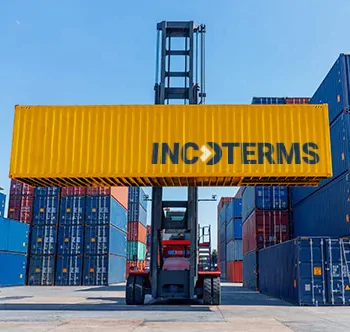
Incoterms international trade rules are a universal code for business, where each term clearly defines who bears the costs and who is responsible for the risks if something goes wrong. Among the current Incoterms terms, DAP delivery terms stand out, providing a balance between the interests of both parties. The Euro Forwarding team organizes complex logistics chains on a daily basis, helping customers figure out whether this format is right for their business.
What is DAP and how is it used in international trade?
The abbreviation DAP stands for “Delivered at Place.” The seller undertakes to deliver the goods to an agreed point in the buyer’s country. This can be the customer’s warehouse, terminal, or any other location specified in the contract. The main feature of these DAP Incoterms is that the goods are considered transferred to the buyer when they arrive at their destination on the vehicle and are ready for unloading.
When using these terms, companies often choose road transport, as this mode of transport allows for the most accurate implementation of the “door-to-door” delivery concept. DAP rules are universal, so they are suitable for any mode of transport or combination of several modes of transport.
When planning international shipments, choosing DAP usually indicates a high level of trust in the logistics partner. The seller takes care of the entire route, except for the final unloading and import customs clearance. This makes transportation predictable for the buyer, as their main task is to meet the cargo and settle local tax issues. 
Distribution of responsibility between the seller and the buyer
Within the DAP term, the main burden falls on the shoulders of the sender of the cargo. The seller is obliged to perform the following steps:
- Prepare the goods, proper packaging, and labeling for export.
- Conclude a contract for international transportation to the specified location.
- Pay all costs associated with delivery until arrival at the destination.
- Arrange for export customs clearance and obtain the necessary permits.
- Transfer the documents allowing the buyer to accept the goods to the buyer.
The buyer, in turn, has a limited but critically important list of responsibilities:
- Pay the cost of the goods in accordance with the contract.
- Arrange and pay for the unloading of the vehicle at the point of arrival.
- Complete all customs procedures for import (payment of customs duties, VAT, excise taxes).
- Accept the goods at the specified place and time.
It is important to remember that responsibility for damage or loss of cargo passes from the seller to the buyer at the moment the goods are ready for unloading at the agreed location.
Pros and cons of DAP compared to other delivery terms
For many importers, this delivery format is ideal because it eliminates the need to find a carrier in another country. This is especially convenient when using multimodal logistics that combines sea, rail, and truck transport. If time is of the essence, the supplier may offer air transport, which also fits perfectly with the logic of DAP. Advantages for the buyer:
- Minimal effort in organizing logistics outside your own country.
- A clear understanding of the cost of goods, including delivery (no hidden freight costs).
- No risks during transit through third countries.
Disadvantages for the seller:
- The need to control transportation on the territory of a foreign state.
- The risk of losing goods until the moment of arrival.
- Transport downtime costs if the buyer delays unloading.
Compared to EXW, where the buyer picks up the goods directly from the factory, DAP Incoterms are much more attractive to the customer, but require the supplier to have a reliable logistics partner capable of ensuring uninterrupted deliveries worldwide.
How to correctly formalize DAP in a contract
For a contract to protect your interests, every word in it matters. In the section on delivery, it is not enough to simply write “DAP Kyiv.” This is too vague a formulation, which can lead to disputes about where the carrier’s area of responsibility ends.
It is recommended to use the most accurate address possible. The correct entry in the documents looks like this: “DAP (name of a specific warehouse or terminal, address), Incoterms 2020.” This indicates the version of the rules you are following and removes any questions about the point of transfer of risk.
It is also worth including clauses in the contract about who pays for cargo insurance. Although DAP rules do not oblige either party to take out insurance, in professional logistics this is considered a necessary safety measure. Modern logistics involves many risks, so it is better to set these details down on paper in advance. 
How DAP affects customs procedures and costs
Under DAP terms, the seller is responsible for the “exit” of goods from the country (export), and the buyer is responsible for their “entry” (import). This means that all costs for local customs procedures, taxes, and fees in the destination country are borne by the buyer.
If you are an importer and work under DAP terms, you will need high-quality customs brokerage services to ensure that your cargo does not get “stuck” at the border crossing or in a customs warehouse. Euro Forwarding provides support at every stage, helping you avoid mistakes in documentation. It is important to consider the following points:
- Any delays during customs procedures due to the buyer’s fault may result in additional costs for storing the cargo.
- If the goods cannot be cleared due to the buyer’s lack of licenses, the risk of returning the goods or losses falls on the customer.
- The price in the contract usually does not include import duties, so financial planning must take these additional payments into account.
By choosing these delivery terms, you get a transparent interaction scheme. This allows you to focus on developing your business while professionals control the route of your cargo.
Want to optimize your shipping costs under DAP terms or need to calculate freight costs for your next contract? Contact our specialists, and we will select the best route for your cargo.
FAQ
- What does the term DAP mean under Incoterms, and at what point are the goods considered to have been handed over to the buyer?
The term DAP under Incoterms stands for Delivered at Place. The goods are deemed to have been transferred to the buyer at the point of arrival when they are ready for unloading.
- What are the key obligations of the seller and the buyer under DAP delivery terms?
The seller is responsible for organising all transport and export formalities, whilst the buyer is responsible for import and unloading. This clearly divides responsibility between the parties.
- At what precise point do the risks of damage to or loss of the goods pass from the sender to the recipient?
The risks pass to the consignee upon the goods’ arrival at the destination and when they are ready for handover. Until then, the responsibility lies with the seller.
- What are the main benefits for the buyer (importer) when choosing the DAP term compared to other terms, such as EXW?
The buyer benefits from simplified international delivery without having to organise transport abroad. Unlike EXW, this reduces their costs and effort in the early stages of delivery.
- What are the main risks and financial costs the seller may face when transporting goods under DAP terms?
Under DAP, the seller bears all costs and risks associated with transport, insurance and export clearance until the goods are delivered to the destination without unloading (to the buyer’s warehouse). The main financial risks include damage to or loss of the cargo in transit, demurrage due to delays, as well as fluctuations in freight rates and exchange rates.
- How are the responsibilities and costs relating to customs clearance (export and import) divided between the parties to the contract?
The seller is responsible for export clearance, whilst the buyer is responsible for import clearance, including all associated payments. The DAP terms clearly allocate these costs.